Cranes by Industry
The right crane depends on what you lift and how often. Here is how crane and attachment choices usually differ across the industries we serve.
Steel fabrication and steel stockholding
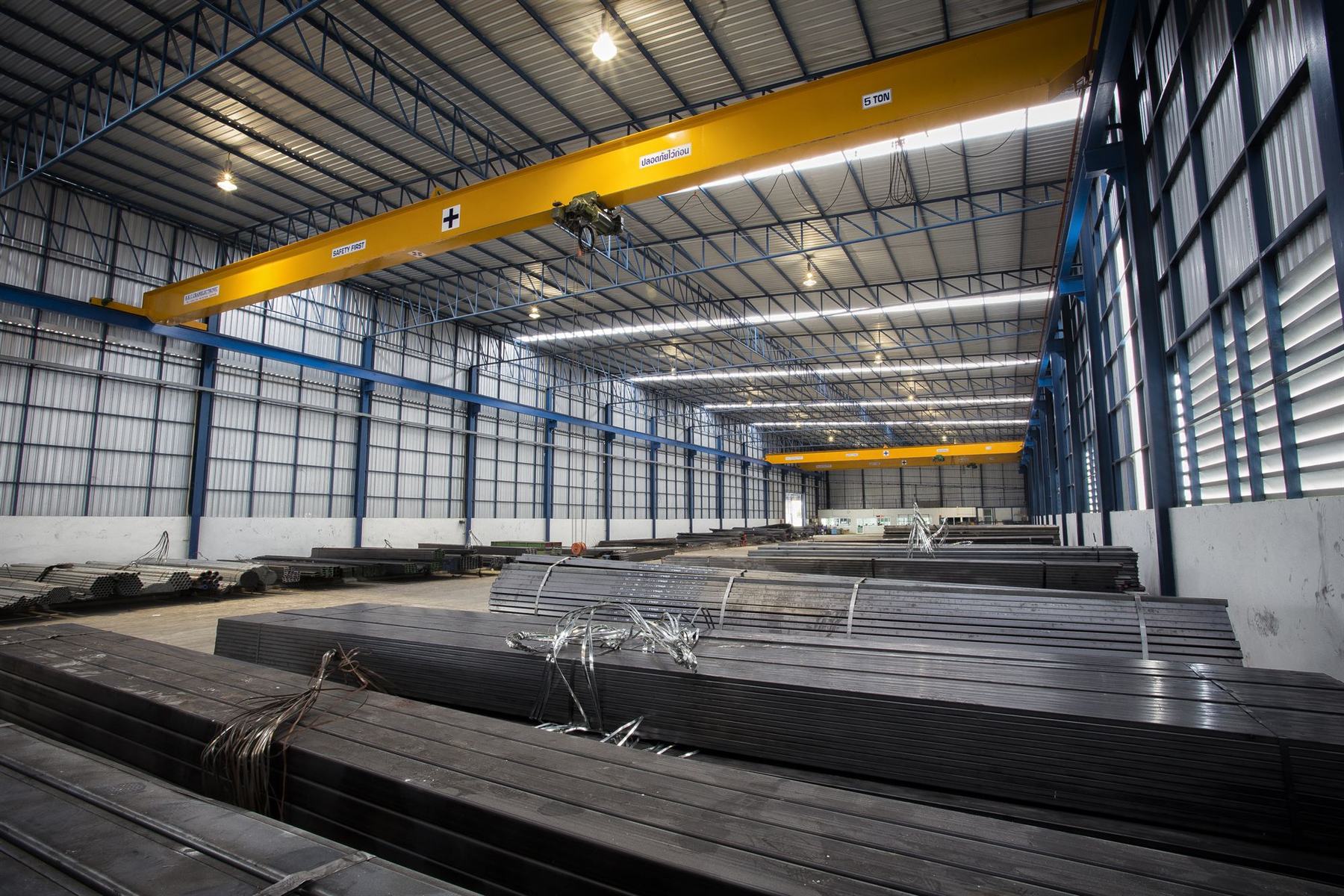
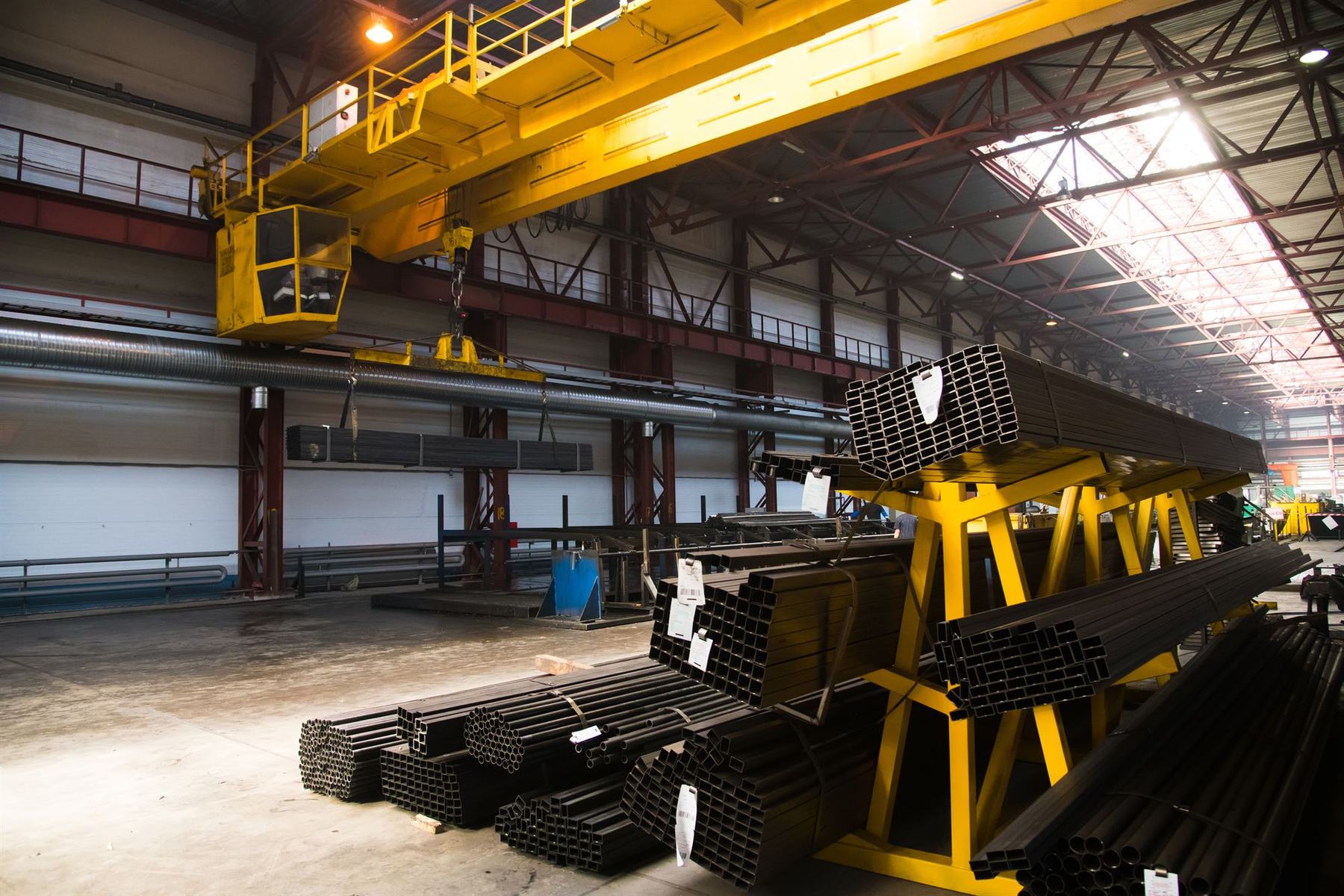
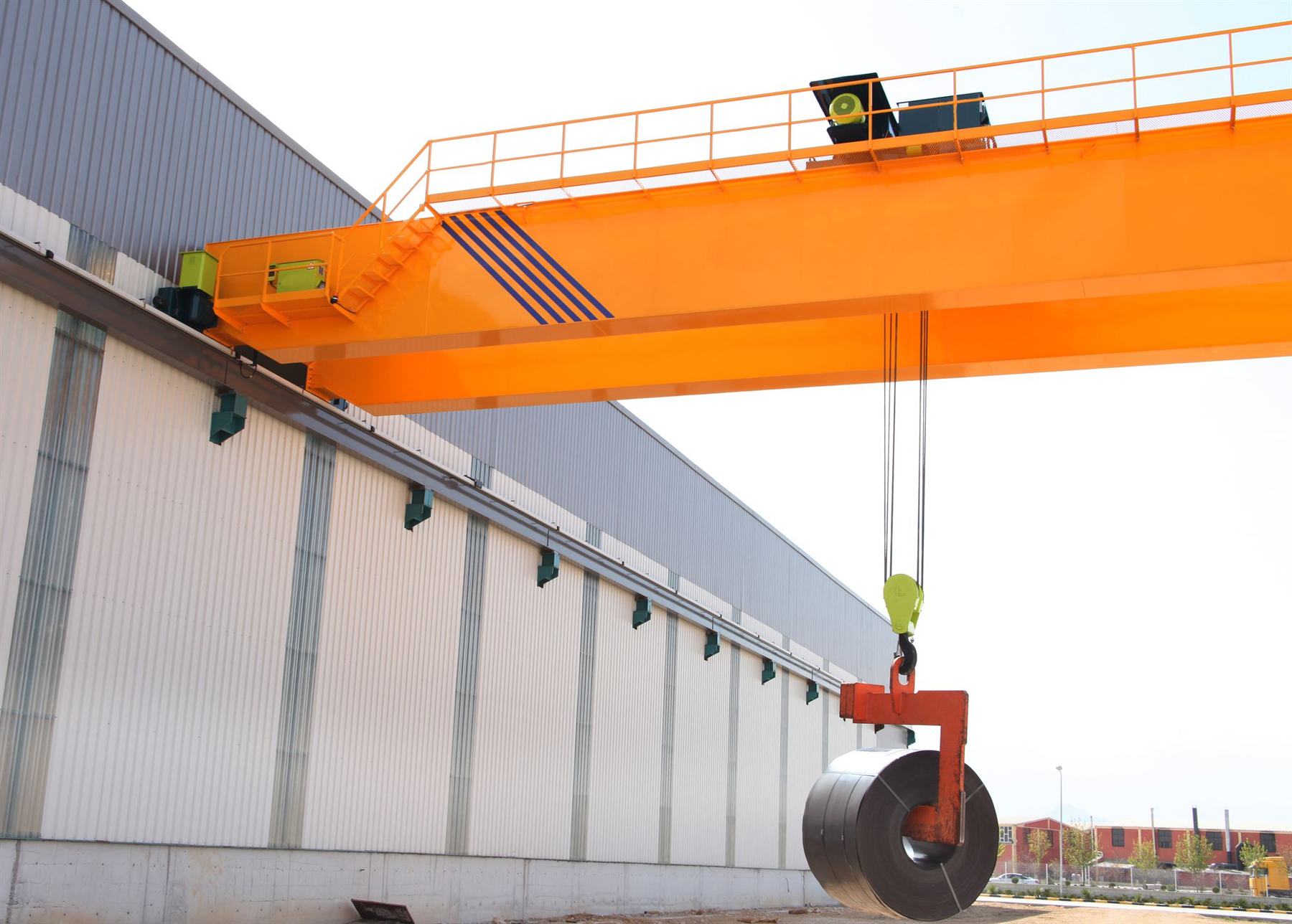
Long profiles, plates and coils call for high capacity and careful load control. Double girder overhead cranes with lifting beams handle long loads between several lifting points, while C-hooks lift coils through the bore. Where the crane runs through every shift, consider a process crane and check the duty class carefully.
Precast concrete and stone yards
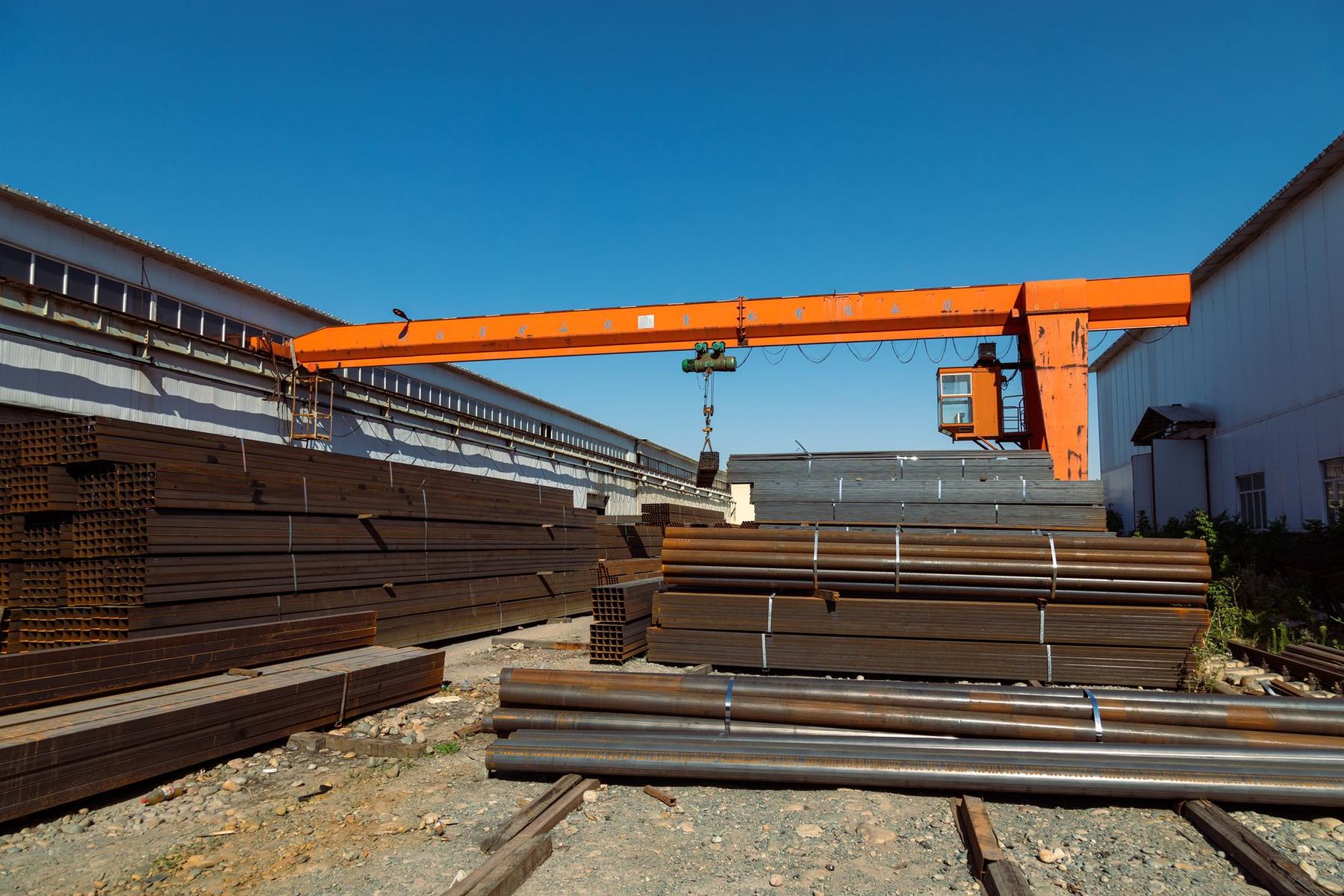
Heavy elements are often stored outdoors, away from any building structure. Gantry cranes run on floor rails across the yard, and need to be planned for wind, rails, foundations and power supply. Read Planning an Outdoor Gantry Crane Project.
Logistics and warehousing
Here the crane serves a storage area and a loading bay. Overhead cranes optimise floor space and eliminate ground-level obstructions, and single girder cranes are often enough for light to medium duty. Cantilever gantries can reach beyond the legs for loading trucks.
Machinery and assembly plants
Assembly work rewards precision more than speed. Stepless inverter drives help position parts gently, and jib cranes with chain hoists deliver fast local lifting at the workstation without tying up the main crane.
Quick guide
| Industry | Common crane | Common attachment |
|---|---|---|
| Steel fabrication | Double girder overhead crane | Lifting beam, magnets |
| Coil handling | Double girder or process crane | C-hook |
| Precast concrete | Gantry crane | Lifting beam, spreader beam |
| Stone yards | Gantry crane | Clamps, spreader beam |
| Logistics | Single girder crane, cantilever gantry | Hook, spreader beam |
| Machinery and assembly | Single girder crane, jib crane | Hook, special devices |
Every plant is different. Book a free site survey and we will match the crane to your process.
Related
Which crane is best for an outdoor yard?
A gantry crane is usually the best fit, because it runs on floor rails and needs no building runway. Semi-gantry and cantilever versions suit yards next to a building or truck loading.
Which attachment is used for steel coils?
A C-hook, which lifts coils, rolls and tubes through the bore with balanced, safe handling.
Which overhead crane is used in steel fabrication and steel stockholding?
A double girder overhead crane with a lifting beam is the usual choice, because long profiles and plates need high capacity and careful load control. The beam carries the load between several lifting points so long sections stay supported, and magnets are another common attachment. The attachment's own weight counts towards the load on the crane, so check the net load you can still lift.
When does a steel plant need a process crane rather than a standard double girder crane?
Consider a process crane when the crane runs through every shift and a stoppage holds up production. Coil handling can fall into this group. The difference lies in the calculated duty more than the capacity, so real lift counts, travel distances and load spectra should set the duty class. For occasional lifts at the same capacity, a standard double girder crane is usually enough.
What lifting attachments do precast concrete plants and stone yards use?
Precast plants commonly use lifting beams and spreader beams, while stone yards commonly use clamps and spreader beams. A lifting beam suits long or flexible elements and a spreader beam suits wide or delicate ones. The choice comes down to the load's dimensions, centre of gravity and where it may be touched. For detail, see choosing C-hooks and lifting beams.
Is a single girder crane enough for a warehouse or logistics centre?
Often yes. Serving a storage area and a loading bay is usually light to medium duty, which a single girder crane handles at lower cost and with less load on the building. It stops being enough when loads are heavy, spans are long or the crane works intensively through the shift. Check lifts per hour and the load spectrum rather than judging by the type of warehouse.
Which crane can load trucks from a yard or warehouse bay?
A cantilever gantry crane is the common answer, because its girder extends beyond the legs and the hook can reach a truck lane outside the rails. Inside a building, an overhead crane can serve a loading bay that lies within its span. Decide where the trucks will stand before the layout is drawn, since that position sets how far the hook has to reach.
What crane setup works best for a machinery or assembly plant?
A single girder crane over the bay, with jib cranes and chain hoists at the workstations, is a common setup. Assembly work rewards precision more than speed, so stepless inverter drives help set parts down gently. The jibs give fast local lifting without tying up the main crane, which stops workstations queueing for it. Special devices can be added at the hook where a part needs them.